

You have enough to manage on your job site. Your SWPPP shouldn't be another headache. Whether you're breaking ground on a commercial development or a residential subdivision, we'll prepare a project-specific SWPPP that meets TCEQ requirements and helps keep your project moving.
What is a SWPPP?
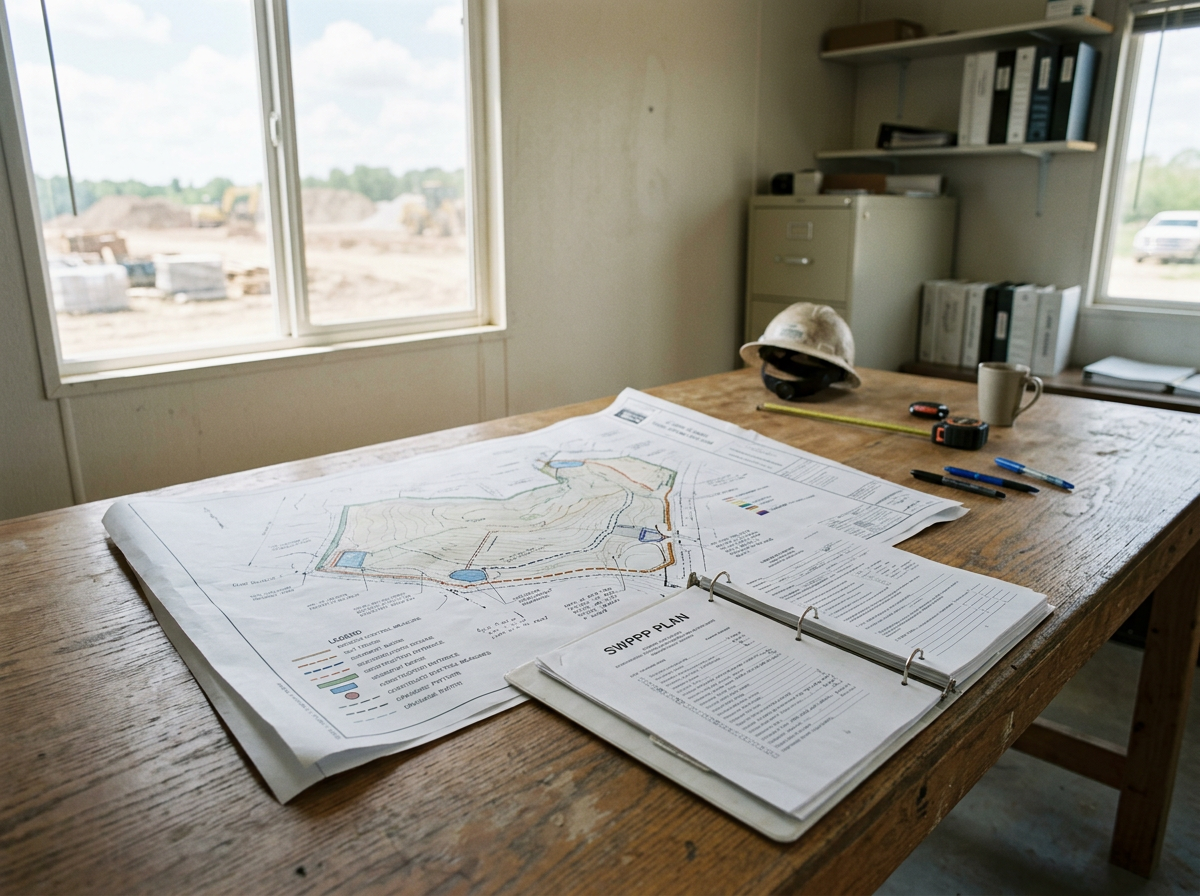
Understanding Stormwater Pollution Prevention Plans
A Stormwater Pollution Prevention Plan (SWPPP) is a site-specific document that explains how stormwater pollution will be prevented during construction. Every construction project has the potential to wash sediment, concrete washout, trash, fuels, chemicals, and other pollutants into nearby streams, lakes, and storm drains when it rains.
A SWPPP identifies those risks and outlines the best management practices (BMPs) that will be used to keep stormwater clean and the project compliant with state and federal regulations.
For most construction projects disturbing one acre or more (or smaller projects that are part of a larger common development), a SWPPP is required before construction begins.
People-First Approach
·
Reliability You Can Count On
·
A Focus on Quality
·
People-First Approach · Reliability You Can Count On · A Focus on Quality ·
Why Is a SWPPP Required?
Stormwater regulations exist to protect Texas waterways from pollution caused by construction activities.
The federal Clean Water Act established the National Pollutant Discharge Elimination System (NPDES), which requires qualifying construction sites to implement stormwater controls. In Texas, these requirements are enforced by the Texas Commission on Environmental Quality (TCEQ) through the Construction General Permit.
A properly prepared SWPPP helps you:
Stay compliant with TCEQ requirements
Be prepared for inspections
Reduce the risk of enforcement actions and costly fines
Avoid project delays caused by compliance issues
Keep your project moving with confidence
A SWPPP isn't simply another document to keep in a binder—it's an important part of keeping your project compliant from groundbreaking to final stabilization.
What Does a SWPPP Include?
Every project is different, which means every SWPPP should be tailored to the specific site. A professionally prepared SWPPP typically includes:
A detailed site map
Drainage patterns and discharge locations
Erosion and sediment control measures (BMPs)
Construction entrance and exit locations
Concrete washout areas
Material storage locations
Spill prevention and response procedures
Inspection schedules
Maintenance requirements
Required permit documentation and records
A SWPPP Is a Living Document
One of the biggest misconceptions about SWPPPs is that they're completed once and forgotten.
In reality, your SWPPP should be updated throughout construction as site conditions change. As grading progresses, drainage changes, or erosion controls are added or relocated, your plan should reflect those changes.
Your SWPPP may need updates when:
Construction phases change
Site maps are revised
Stormwater controls are installed, moved, or removed
Corrective actions are required after inspections
Project information changes
Keeping your SWPPP current is just as important as creating it in the first place.
FAQs
Is a SWPPP the same as a permit?
1
No. A SWPPP is the written stormwater pollution prevention plan required for many construction projects. Depending on your project, you may also need to submit permit documents such as a Notice of Intent (NOI).
How long does it take to prepare a SWPPP?
2
Most SWPPPs can be completed within a few business days after we receive the necessary project information.
Can I prepare my own SWPPP?
3
While it's possible, many contractors choose to work with a professional to ensure their plan meets regulatory requirements and accurately reflects site conditions.
5
Does my SWPPP need to be updated?
4
What happens if I don't have a SWPPP?
Yes. Your SWPPP should be updated whenever site conditions, drainage patterns, stormwater controls, or project information change.
Failing to have a required SWPPP can lead to compliance issues, including TCEQ enforcement actions, fines, failed inspections, project delays, or stop-work orders. A properly prepared and maintained SWPPP helps keep your project compliant and moving forward.
LET’S GET STARTED
How WayPoint Environmental Can Help
Stormwater compliance doesn't have to slow your project down.
WayPoint Environmental provides complete SWPPP services for construction projects throughout Texas, including:
Custom SWPPP preparation
Notice of Intent (NOI) filing
Routine site inspections
SWPPP updates throughout construction
Compliance documentation
Ongoing support as your project progresses
Our goal is simple: make compliance easy so you can spend your time managing your project—not your paperwork.